Christmas Eve, in the frame narrative
Douglas Unveils the Story
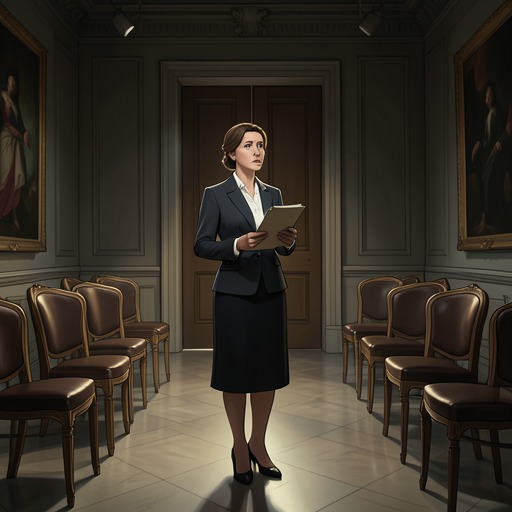
At a Christmas party, someone told a story about a ghost appearing and scaring the children. [Douglas](entity:character-recall-character-douglas-e0c397ccfd45) then said he knew a more terrifying story involving two children. He explained that the experience was recorded in an old manuscript, which was sent to him many years ago by a former family teacher; she had
Before the summer at Bly
The Governess Accepts the Position
[Douglas](entity:character-recall-character-douglas-e0c397ccfd45) told the story of the manuscript when a young family teacher appeared. She was the daughter of a poor country priest, just starting to look for work. She met her handsome, wealthy uncle on [Harley Street](entity:location-recall-location-harley-street-7e8910b620d4); he needed someone to take care of his orphaned nephew and niece who lived in the
Before the Governess arrives at Bly
The Former Governess’s Death
The uncle of the children explained that there was previously a family teacher who looked after the children until she died; after that, [Miles](entity:character-recall-character-miles-8fbb70d0c9b8) was sent to school. Since then, Mrs. Gross has been looking after [Flora](entity:character-recall-character-flora-c1b11a6eb9e1), while the other servants have managed the manor
Late June, at the start of the summer
Arrival at Bly
After a difficult journey, the governess arrived at the Gros family's mansion and found it not the gloomy place she had feared, but an unexpectedly bright and warm mansion. Mrs. Gros welcomed her, and the beauty and composure of [Flora](entity:character-recall-character-flora-c1b11a6eb9e1) immediately captivated her, making the child seem like
The day after the Governess arrives
Flora Guides the House Tour
[Flora](entity:character-recall-character-flora-c1b11a6eb9e1) takes the family tutor through the rooms, corridors, stairs, and tower of the Blay mansion, making the unfamiliar mansion seem like a castle from a romantic story. The family tutor is moved by the child's confidence and sees this tour as the beginning of a close friendship
The second evening at Bly
The Headmaster’s Letter
A letter was sent from [Miles](entity:character-recall-character-miles-8fbb70d0c9b8) School, attached with a note from Miles's uncle, instructing the private tutor to handle the matter but not to report to him. The principal wrote that Miles could not return to school, but did not specify what wrong he had done. When the private tutor hinted that
The day after the Headmaster’s Letter
Mrs. Grose Defends Miles
The tutor asked if [Miles](entity:character-recall-character-miles-8fbb70d0c9b8) had done anything wrong. Mrs. Gross insisted that he was still a child, but did not claim he had never behaved badly. She recalled that the previous tutor was young and beautiful, and then almost revealed that she was referring to Miles' uncle, but changed her mind
Friday, shortly after the Headmaster’s Letter
Miles Returns to Bly
The tutor welcomed [Miles](entity:character-recall-character-miles-8fbb70d0c9b8) when the carriage arrived, deeply moved by his beauty, gentleness, and apparent innocence. His appearance made the school's unexplained expulsion decision almost impossible to connect with this child. She decided not to question him, the school, or his uncle about the letter. Mrs. Gross
The first weeks of summer
The Governess’s Summer at Bly
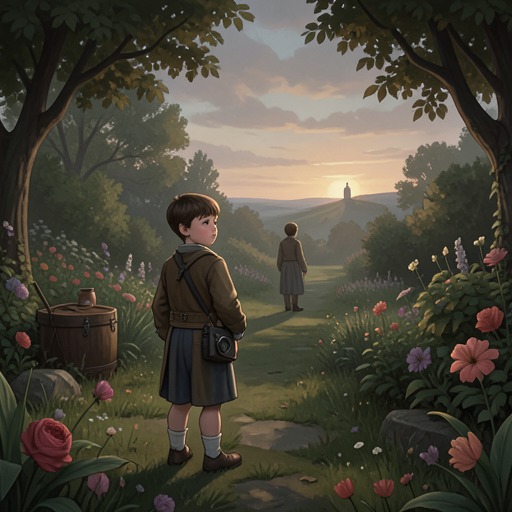
The tutor gradually adapted to the life of taking lessons, playing games, and spending long hours outdoors with [Miles and Flora](entity:relation-recall-relation-miles-and-flora-033955ddb90d). She found the children especially gentle, intelligent, and affectionate, and admitted that teaching them lessons seemed less important than enjoying the freedom and beauty of this place. She also realized
One afternoon in late June
Quint Appears on the Tower
One day, she spent her time alone outdoors, imagining that she might meet someone who understood and accepted her. But what she saw was a stranger standing on a tall tower at's manor, staring at her from between the tower's parapets. She had never seen this person before
That evening after the tower sighting
The Governess Conceals Her Alarm
When the tutor returned to the manor, Mrs. Gross greeted her with relief, making her believe that the housekeeper did not know about the stranger. She did not tell Mrs. Gross what had happened, but instead gave a lame excuse for being late and went back to her room
A Sunday evening several days later
The Governess Sees Quint Again
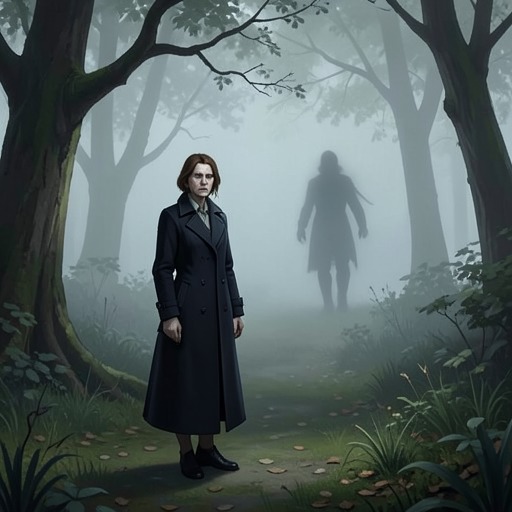
A few days later, on a Sunday evening, the private tutor entered the dining room to get her gloves and saw the same man standing near the window. His gaze moved away from her and turned elsewhere; she was certain he was looking for someone in the manor. She rushed outside to stop him
That same Sunday evening
Quint Is Identified
The tutor told Mrs. Gross that a man who frightened her appeared successively at the window of the tower and the dining room. She described his face, red hair, strange beard, and borrowed clothes; Mrs. Gross recognized that the clothes belonged to the children's uncle and said the man's name
Later that Sunday night
Mrs. Grose Reveals Quint’s Power
Later that evening, the tutor and Mrs. Gross privately discussed Quent's behavior and his influence at the house. Mrs. Gross admitted that he was, cunning, and intimidating; however, she had never reported him because her uncle disliked hearing complaints, and Quent was then in charge of
The winter before the Governess arrives
Quint’s Death Is Recounted
Mrs. Gross said that Quint was found dead on the road the night after a winter night, with a fatal head injury. The official story was that he fell on an icy slope after leaving a tavern; however, he had experienced other disturbing, mysterious events before his death. This account determined Quint's
The night Quint is identified
The Governess Vows to Protect the Children
The governess concludes that Quint’s apparitions are directed toward [Miles](entity:character-recall-character-miles-8fbb70d0c9b8) and vows to place herself between the children and any danger. She imagines that by bearing the encounters herself she can protect them from seeing the dead man.
She is disturbed that neither child has mentioned Quint, despite [Mrs. Grose](entity:character-recall-character-mrs-grose-c705cfb91ffe)’s claim that he and Miles were once close. The vow becomes the governing idea of her conduct, but it also helps turn her fear into a mission she pursues with growing certainty.
A warm afternoon soon after the first haunting disclosures
Miss Jessel Appears by the Lake
While the governess sits with [Flora](entity:character-recall-character-flora-c1b11a6eb9e1) beside the water, she senses a presence on the far side of the lake. She holds her gaze on the child, waiting to see whether Flora will react, and notices that the girl has fallen quiet and turned away from the water to concentrate on making a toy boat.
When the governess looks up, she sees a woman in black across the lake, pale and beautiful but, in her judgment, horrifying. The figure fixes its attention on Flora rather than the governess, and then disappears without approaching.
Shortly after Miss Jessel’s appearance by the lake
The Governess Accuses Flora of Seeing
The governess tells [Mrs. Grose](entity:character-recall-character-mrs-grose-c705cfb91ffe) that [Flora](entity:character-recall-character-flora-c1b11a6eb9e1) saw the woman across the lake but concealed her recognition. She identifies the apparition as [Miss Jessel](entity:character-recall-character-miss-jessel-797b10e617bb), her predecessor, and fears that Flora’s silence means the child can communicate with the dead without her knowledge.
Mrs. Grose asks how the governess knows what the child saw. The governess insists that Flora’s sudden silence, turned back, and intensified play revealed a deliberate effort to distract her, though the evidence remains bound to her own interpretation.
During the conversation after the lake sighting
Mrs. Grose Confirms Jessel’s Past
Under questioning, [Mrs. Grose](entity:character-recall-character-mrs-grose-c705cfb91ffe) says that [Miss Jessel](entity:character-recall-character-miss-jessel-797b10e617bb) was a lady who had become involved with Quint despite their difference in social position. She describes Quint as a man who did as he pleased and says that Miss Jessel could not remain at [Bly](entity:location-recall-location-bly-7bc972a9dba8) after what had happened.
Mrs. Grose does not know how Miss Jessel died, but she believes the former governess suffered because of her relationship with Quint. The disclosure strengthens the governess’s conviction that the apparitions are linked to a corrupting past shared by the two adults.
Late that night
The Governess Questions Miles’s Past
In a private conversation, the governess presses [Mrs. Grose](entity:character-recall-character-mrs-grose-c705cfb91ffe) to explain why she once admitted that [Miles](entity:character-recall-character-miles-8fbb70d0c9b8) had not always been good. Mrs. Grose recalls that Quint and Miles spent months together, sometimes as if Quint were his tutor, while [Miss Jessel](entity:character-recall-character-miss-jessel-797b10e617bb) occupied herself with [Flora](entity:character-recall-character-flora-c1b11a6eb9e1).
Mrs. Grose says she once reproached Miles for forgetting his station and questioned Miss Jessel about the arrangement. Miles denied some occasions when he had gone off with Quint, but Mrs. Grose cannot say whether the boy understood the relationship between the adults. The governess treats the denials as evidence of concealment, while the facts remain incomplete.
An early morning several nights later
The Governess Sees Quint on the Staircase
After sensing that something is moving in the house, the governess leaves her room and walks toward the main staircase. Her candle goes out, and in the faint dawn light she sees [Peter Quint](entity:character-recall-character-peter-quint-54af937ee5e7) standing on the landing, watching her at close range.
This time she feels no terror and holds her ground. The two remain locked in silence until Quint turns and descends the stairs, disappearing into the darkness. The encounter gives the governess a fleeting sense of mastery over the figure.
Immediately after the staircase encounter
Flora Is Found Behind the Curtain
Returning to her room, the governess finds [Flora](entity:character-recall-character-flora-c1b11a6eb9e1)’s bed apparently empty, with its curtains arranged to make it look occupied. She discovers the girl crouched behind the window blind, barefoot and awake, and asks whether she saw anyone outside.
Flora denies seeing anyone and says that she had looked out because she thought someone might be walking in the grounds. The governess believes the child is lying, but accepts her explanation rather than openly confronting her, preserving the uneasy silence between them.
Eleven nights after the staircase encounter
Miles Is Found on the Lawn
The governess wakes to find [Flora](entity:character-recall-character-flora-c1b11a6eb9e1) again behind the window blind, watching outside by moonlight. Believing the girl is focused on [Miss Jessel](entity:character-recall-character-miss-jessel-797b10e617bb), she slips from the room and goes to an unused chamber in the old tower to watch the grounds from another window.
On the lawn below, she sees a figure looking upward toward the tower. At first she expects to find a ghost, but recognizes the figure as [Miles](entity:character-recall-character-miles-8fbb70d0c9b8), standing alone and apparently watching someone above him. The discovery makes the children’s night movements more difficult to explain away.
The following day
Miles Explains His Night Excursion
The governess takes [Miles](entity:character-recall-character-miles-8fbb70d0c9b8) back to his room after finding him outside at night. He does not resist her and explains that he went out in order to make her think him bad for a change; he had arranged for [Flora](entity:character-recall-character-flora-c1b11a6eb9e1) to rise and look out so that the governess would notice him.
His account makes the excursion sound like a deliberate game rather than a mysterious attempt to meet a ghost. The governess accepts his charm and ingenuity, but interprets his knowledge of how to manipulate her as another sign that he is hiding something.
After Miles explains his night excursion
The Governess Builds a Theory of Corruption
The governess tells [Mrs. Grose](entity:character-recall-character-mrs-grose-c705cfb91ffe) that [Miles](entity:character-recall-character-miles-8fbb70d0c9b8)’s explanation confirms her suspicion that the children have been maintaining a hidden life with Quint and [Miss Jessel](entity:character-recall-character-miss-jessel-797b10e617bb). She argues that their extraordinary goodness and affection are a performance masking the ghosts’ influence.
She believes the apparitions are trying to draw the children toward them and may ultimately destroy them. Mrs. Grose suggests that the uncle should be summoned, but the governess refuses to break his instruction against troubling him, leaving herself as the children’s sole protector.
The following weeks
Silence Becomes a Household Pact
The governess continues to watch the children closely, while [Miles and Flora](entity:relation-recall-relation-miles-and-flora-033955ddb90d) avoid any direct mention of the apparitions, [Miss Jessel](entity:character-recall-character-miss-jessel-797b10e617bb), Quint, or the reason for [Miles](entity:character-recall-character-miles-8fbb70d0c9b8)’s expulsion. Their conversations circle around safe subjects, and both children seem increasingly skilled at diverting her attention.
The governess suspects that the children are aware of the ghosts and that their charm conceals a private understanding. Yet she cannot prove what they see or say when she is not listening, and the enforced silence deepens her isolation and obsession.
Autumn, during the period of silence
The Governess Hears the Children’s Questions
In the wake of the haunting’s first appearances, the children repeatedly ask when their uncle will visit and whether they should write to him. The governess keeps their letters rather than sending them, telling herself that she is honoring the uncle’s wish not to be bothered.
She interprets the questions as a tactful way for the children to relieve awkward silences and perhaps to expose her reluctance to seek help. Her refusal to contact their guardian keeps the household isolated even as the crisis grows more acute.
A Sunday morning in autumn
Miss Jessel Appears in the Schoolroom
After [Miles](entity:character-recall-character-miles-8fbb70d0c9b8) asks when he will return to school and presses the governess about whether his uncle knows why he is being kept at [Bly](entity:location-recall-location-bly-7bc972a9dba8), she becomes overwhelmed by the conversation. She leaves church before the service and returns to the empty house, considering whether to flee her post.
In the schoolroom she sees [Miss Jessel](entity:character-recall-character-miss-jessel-797b10e617bb) seated at her table, bent over the writing materials. The apparition rises with a look of indifference and sorrow, then vanishes. The encounter halts the governess’s attempted escape and convinces her that she must stay to confront the danger.
That Sunday morning before the schoolroom apparition
Miles Demands School and His Uncle
While walking to church, [Miles](entity:character-recall-character-miles-8fbb70d0c9b8) asks the governess when he will return to school and says that he wants to see more of life and be among boys like himself. He also asks whether his uncle knows how he is behaving and proposes that the uncle could be made to come to [Bly](entity:location-recall-location-bly-7bc972a9dba8).
The governess realizes that Miles understands how much she fears explaining his expulsion and the strange events at the house. His questions expose the cost of her silence and make her consider leaving, even as his request for his guardian’s presence points toward the intervention she has resisted.
The evening after Miss Jessel appears in the schoolroom
The Governess Begins a Letter
After deciding that the uncle must be told about [Miles](entity:character-recall-character-miles-8fbb70d0c9b8)’s school expulsion and the situation at [Bly](entity:location-recall-location-bly-7bc972a9dba8), the governess begins a letter in her room. Before writing further, she hears Miles awake and goes to speak with him.
The decision marks a break with the uncle’s no-contact condition, which she has treated as binding even while fearing for the children. The letter becomes the first concrete attempt to bring the crisis beyond Bly, though it will not reach its intended recipient.
That same stormy night
The Bedroom Confrontation
In [Miles](entity:character-recall-character-miles-8fbb70d0c9b8)'s room, the family teacher asked about his school life and what happened before he returned to the manor. He said he wanted to leave, but would not explain further, telling her not to bother him; she pleaded with him to let her help save him
The following afternoon
Flora Disappears
after an exceptionally morning class, miles played the piano for his tutor, but flora was missing. the tutor and gross madam searched the house together; gross madam had thought the two children were together all along, but neither could find flora. the tutor concluded that flora had gone to the lake
Late afternoon that same day
Flora Is Found at the Lake
The tutor and Mrs. Gross arrived at the lake and found the boat not where it usually moored. The tutor inferred that [Flora](entity:character-recall-character-flora-c1b11a6eb9e1) had rowed across the lake and hidden the boat on the other side; they searched along the shore and finally found the hidden boat near a landing spot. Then
Immediately after Flora is found
The Lake Confrontation
The tutor asked Miss [Flora](entity:character-recall-character-flora-c1b11a6eb9e1) where Jessel was and saw a ghostly figure appear on the other side. For a moment, she thought this scene proved her words true; but Mrs. Gross did not see that figure, and Flora even refused to look in that direction
That evening and the next morning
Flora Leaves Bly
After the standoff by the lake, Mrs. Gross took [Flora](entity:character-recall-character-flora-c1b11a6eb9e1) away from the [Bly](entity:location-recall-location-bly-7bc972a9dba8) manor. That night, Flora stayed with her, separated from the governess; it is said that the child was feverish and extremely anxious at the thought of having to see her former governess again
The morning Flora leaves
The Governess Keeps Miles Behind
Before Mrs. Gross and Frohling left, the governess asked the butler to take the girl away, leaving her alone with [Miles](entity:character-recall-character-miles-8fbb70d0c9b8). She believed that as long as Miles was separated from his sister and no longer influenced by what she considered [Miss Jessel](entity:character-recall-character-miss-jessel-797b10e617bb), he might still speak honestly
The morning Flora leaves Bly
The Missing Letter Is Discovered
The tutor told Mrs. Gross that she had written a letter to [Miles](entity:character-recall-character-miles-8fbb70d0c9b8)'s uncle, but learned that the letter had never been sent. Mrs. Gross said that the letter disappeared from the table in the entrance hall, and the servant Luke did not take it. They inferred that Miles may have stolen and
Later that morning
The Governess Waits Alone with Miles
After Mrs. Gross and [Flora](entity:character-recall-character-flora-c1b11a6eb9e1) left, the governess found it hard to cope with [Miles](entity:character-recall-character-miles-8fbb70d0c9b8) alone. She pretended to be calm in front of the servants, then waited for Miles to return from his walk and tried to make their new situation seem normal. The changes in the household had become known to
That day, during their final conversation
Miles Admits Taking the Letter
At the restaurant window, [Miles](entity:character-recall-character-miles-8fbb70d0c9b8) asked [Flora](entity:character-recall-character-flora-c1b11a6eb9e1) if she was really sick and said he enjoyed the free days at the. The tutor said he stayed because he cared about him and hoped he would tell her what was troubling him; he agreed to tell her, but not now. She asked
During the final conversation, shortly before Miles’s death
Miles Describes the School Scandal
The tutor asked [Miles](entity:character-recall-character-miles-8fbb70d0c9b8) if he had stolen anything at school. He denied stealing, then said that he had said some things to a few boys he liked, and the school considered that enough to expel him. He could not remember the names of those boys or exactly what he had said
At the climax of the final conversation
Quint Appears at the Window
when the tutor asked miles what he had said at school, peter quent appeared at the window. the tutor saw him and screamed, but miles could not see the shadow; he asked miss jessel if she was there, and when the tutor told him there was a man at the window
Moments after Quint appears at the window
Miles Dies in the Governess’s Arms
When [Miles](entity:character-recall-character-miles-8fbb70d0c9b8) screamed, the family teacher caught him and held him tightly. She tried to comfort herself, believing she had saved him; but soon discovered his heart had stopped beating, and the boy died